Monday
Wednesday
My friend who is a fan of Dorothy L Sayers queried my previous post about Sayers' writing lacking intense emotion and it made me think more deeply about it.
I think it comes down to technique and how technique in fiction writing has changed over time. I am now deep into Gaudy Night (dug out of the library vaults!) and am loving it, however, I think it has a couple of examples of what I mean. On page 9, the protagonist Harriet Vane finds a tie belonging to Philip Boyes (the ex-lover who she was accused of murdering in Strong Poison) and the comment in the text is: ‘how horrible that that should still be hanging about!’ On page 34, Harriet is talking about finding the dead body with the cut throat (described in Have His Carcass), she says, ‘It was beastlier than anything you can imagine.’
Of course, there’s intense emotion behind these phrases, however, I think in more modern fiction they would be accentuated by (a) some kind of internal monologue and/or (b) a bodily feeling within the character. It doesn’t happen here at least partly because of the way third person is being used. We get much closer to characters (including inside their heads) in modern fiction even in third person, whereas in Sayers' day there was more of a sharp distinction between first and third person. With the former the reader was inside the character, with latter they were most definitely outside. I believe that distinction has collapsed to a certain extent in more modern writing. And I enjoy that both as a writer as well as a reader.
I think it comes down to technique and how technique in fiction writing has changed over time. I am now deep into Gaudy Night (dug out of the library vaults!) and am loving it, however, I think it has a couple of examples of what I mean. On page 9, the protagonist Harriet Vane finds a tie belonging to Philip Boyes (the ex-lover who she was accused of murdering in Strong Poison) and the comment in the text is: ‘how horrible that that should still be hanging about!’ On page 34, Harriet is talking about finding the dead body with the cut throat (described in Have His Carcass), she says, ‘It was beastlier than anything you can imagine.’
Of course, there’s intense emotion behind these phrases, however, I think in more modern fiction they would be accentuated by (a) some kind of internal monologue and/or (b) a bodily feeling within the character. It doesn’t happen here at least partly because of the way third person is being used. We get much closer to characters (including inside their heads) in modern fiction even in third person, whereas in Sayers' day there was more of a sharp distinction between first and third person. With the former the reader was inside the character, with latter they were most definitely outside. I believe that distinction has collapsed to a certain extent in more modern writing. And I enjoy that both as a writer as well as a reader.


Monday
I am doing what I always tell my students to do - reading the genre/form I am writing. I have heard some would-be writers declaring that they won't read others authoring in their chosen genre or form. They claim it will contaminate their style or their inspiration. And yet artists, dancers, musicians and anyone else working in the creative arts will study what has come before them and their contemporary colleagues' output, so why not writers?
I am, therefore, delving into crime/mystery fiction. One of my writing friends put me onto Dorothy L Sayers. My only previous brush with this author was the TV series with Ian Carmichael in the title role, now only very hazily remembered. I was surprised to find, then, that the edition of 'Have His Carcase' I found in the library got me hooked. For sure, the language and dialogue are very dated, but for anyone interested in pace and plotting, this story fairly rattles along.
There's no doubt that crime/fiction has changed its focus since Sayers' time away from intricate story-lines. These days there is more emphasis on character building and the psychological layering of those involved. I can't imagine a modern writer attempting as complex a plot as 'Have His Carcase' which involves letters in code, people in disguises and numerous false alibis. Still I think there is something to be garnered from the skill with which Sayers sets her riddles and unravels them. And even she has started down the path of the 'flawed hero' which is so beloved of present day crime fiction. Lord Peter Wimsey is far from the perfect leading man I recall from the small screen.
In some ways, because of the lack of intense emotion expressed in the pages of her novel, she does capture something I heard a forensic pathologist comment on in an interview I saw recently. He said that, in general, crime fiction fails to portray the casualness and the indifference of the perpetrators of the violence he encounters in his job every day. Sadly, that perhaps hasn't changed in the last eighty years.
I am, therefore, delving into crime/mystery fiction. One of my writing friends put me onto Dorothy L Sayers. My only previous brush with this author was the TV series with Ian Carmichael in the title role, now only very hazily remembered. I was surprised to find, then, that the edition of 'Have His Carcase' I found in the library got me hooked. For sure, the language and dialogue are very dated, but for anyone interested in pace and plotting, this story fairly rattles along.
There's no doubt that crime/fiction has changed its focus since Sayers' time away from intricate story-lines. These days there is more emphasis on character building and the psychological layering of those involved. I can't imagine a modern writer attempting as complex a plot as 'Have His Carcase' which involves letters in code, people in disguises and numerous false alibis. Still I think there is something to be garnered from the skill with which Sayers sets her riddles and unravels them. And even she has started down the path of the 'flawed hero' which is so beloved of present day crime fiction. Lord Peter Wimsey is far from the perfect leading man I recall from the small screen.
In some ways, because of the lack of intense emotion expressed in the pages of her novel, she does capture something I heard a forensic pathologist comment on in an interview I saw recently. He said that, in general, crime fiction fails to portray the casualness and the indifference of the perpetrators of the violence he encounters in his job every day. Sadly, that perhaps hasn't changed in the last eighty years.
Tuesday
Knitting
There came
a moment of inattention,
I
think I was trying to make sense of my own design,
when
it began to unravel.
I
dropped stitches,
felt
the yarn untwist then knot between my fingers.
There
came that moment of inattention,
when
my own fashioning began to seem unwieldy,
and
I purled instead of plained
and
our glorious pattern looked
awkward,
unworked, unbeautiful.
There
came this moment
when
I saw what I had done
and
cried.
Then
there came another moment
when
together we scooped up the sorry mess
and
wove
a variation
on what we had before
but
more brilliant.
Monday
I have re-read the first draft of my novel and have begun to fall out of love with it. I know this is part of my process as a writer and also has to do with where I am emotionally. If there are tough days to do with being a writer, then this is what makes them tough for me.
It's at times like these that I remember this from Elif Shafak (quoted in the English PEN magazine):
When we are faced with censorship, intimidation, persecution, ignorance and sheer fanaticism, there can be parts of us that feel despondent or fearful or doubtful. And that's OK. We are not heroes and we shouldn't try to be. Yet at the same time, we should remember that our writing is stronger than us. Our writing is wiser than us. Basically it is more than us personally. So the writer can be afraid or depressed, but the writing should not waver because words matter. Stories matter.
Of course, Shafak is talking about situations far more grim than mine, where writers ARE heroic, far more heroic and wise than I could ever be. Still I find it a beautiful and encouraging quotation, I hope others will too.
It's at times like these that I remember this from Elif Shafak (quoted in the English PEN magazine):
When we are faced with censorship, intimidation, persecution, ignorance and sheer fanaticism, there can be parts of us that feel despondent or fearful or doubtful. And that's OK. We are not heroes and we shouldn't try to be. Yet at the same time, we should remember that our writing is stronger than us. Our writing is wiser than us. Basically it is more than us personally. So the writer can be afraid or depressed, but the writing should not waver because words matter. Stories matter.
Of course, Shafak is talking about situations far more grim than mine, where writers ARE heroic, far more heroic and wise than I could ever be. Still I find it a beautiful and encouraging quotation, I hope others will too.
How the mighty have fallen. For years, I have had a vague sense of who Radclyffe Hall was, the woman who wrote The Well of Loneliness, the seminal treatise on the rights of gay women. The book was banned for being obscene and RH was vilified for writing it. However, I have just read Diana Souhami's The Trials of Radclyffe Hall and it has left a rather sour taste in the mouth.
According to Souhami, Radclyffe Hall supported Fascism and Mussolini, was intolerant and unkind and her pleas were for a 'certain class' of lesbian (or 'invert' as she called herself). They were god's creatures and, therefore, to be treated with forbearance and consideration. Others, it seemed, could go hang.
The trial did underscore the deep misogyny and prejudice of the government and judiciary of the time. Indeed, though we quite rightly still rail against the 'isms' of today's society, we need only go back a century to see how far we have come. And as for violence, is anyone else shocked by the White Queen being serialised on the BBC? Assuming that at our core humanity has not changed in 600 years, there is a lot of brutality which is now lying dormant.
It is hard, however, to see Radclyffe Hall, a feminist icon, in such a different light. What she did with The Well of Loneliness was ground-breaking and paved the way for what was to come. And yet, as an individual, she was so imperfect. It is difficult for me to marry those two aspects. And it is a conundrum presented by a number of other writers.
Going off on another tangent, when (in the late 1930s) RH was diagnosed with cancer, her doctors advised her to cut down on smoking. So they must have known even then about the link?
According to Souhami, Radclyffe Hall supported Fascism and Mussolini, was intolerant and unkind and her pleas were for a 'certain class' of lesbian (or 'invert' as she called herself). They were god's creatures and, therefore, to be treated with forbearance and consideration. Others, it seemed, could go hang.
The trial did underscore the deep misogyny and prejudice of the government and judiciary of the time. Indeed, though we quite rightly still rail against the 'isms' of today's society, we need only go back a century to see how far we have come. And as for violence, is anyone else shocked by the White Queen being serialised on the BBC? Assuming that at our core humanity has not changed in 600 years, there is a lot of brutality which is now lying dormant.
It is hard, however, to see Radclyffe Hall, a feminist icon, in such a different light. What she did with The Well of Loneliness was ground-breaking and paved the way for what was to come. And yet, as an individual, she was so imperfect. It is difficult for me to marry those two aspects. And it is a conundrum presented by a number of other writers.
Going off on another tangent, when (in the late 1930s) RH was diagnosed with cancer, her doctors advised her to cut down on smoking. So they must have known even then about the link?
Wednesday
I have just finished the initial draft of my novel 'The Art of the Imperfect' which I intend to be the first of a series featuring Hannah Poole, a counsellor with her own demons, her neighbour, Aurora Harris and Detective Sergeant Theo Akande. It is a re-write of a re-write from a novel completed many years ago. By fitting it into the murder-mystery genre I hope to make it more publishable while still staying true to the exploration of mental health which is my preoccupation. Others - Kate Atkinson, Ruth Rendell, Minette Walters, Val McDermid - have also 'subverted' this genre to discuss issues close to their heart, so I take my lead from them.
Having a completed draft and a clearer shape for my novel I feel quite giddy!
Having a completed draft and a clearer shape for my novel I feel quite giddy!
Tuesday
On Saturday was the second in the series of Healing Words workshops which I am facilitating and it went really well. I have devised these workshops for therapists, health professionals and writers working in therapeutic environments. They are an invitation for participants to explore how creative writing can work therapeutically. There are six in all, taking various themes, individuals can come to all six or pick and choose ones which interest them. At this last one we were looking at metaphor.
I had a great time, so it is very satisfying (and confidence boosting) when the participants say that they are gaining from the experience too. Here are some comments from the evaluations:
I had a great time, so it is very satisfying (and confidence boosting) when the participants say that they are gaining from the experience too. Here are some comments from the evaluations:
‘Gently
& thoughtfully presented – allowed me to explore and learn more about using
metaphor.’
‘The
metaphor workshop was magical’
‘I’d
highly recommend Kate’s writing workshops.
I’ve done two and have learnt so much
in each but also really enjoyed them.’
The next workshop will be looking at poetry in this context. For more information contact: mail@scpti.co.uk
Monday
I've just finished reading 'Mrs Robinson's Disgrace', another cracking read from Kate Summerscale (I previously read her 'The Suspicions of Mr Whicher'). This new book is about a divorce case in 1858 (one of the first after divorce stopped being reliant on the passing of an Act of Parliament) where the evidence for the husband of his wife's infidelity came from her private journal.
Publicly at least, everyone involved in the case and those spectating were outraged and shocked by the honest and explicit content of Mrs Robinson's diary. And since she addressed a 'reader' there were questions about whether it was intended for publication. However, Summerscale suggests that the addressing of 'the reader' might give an explanation as to why Mrs Robinson kept such a journal: since she no longer believed an spiritual afterlife, she hoped for compassion from future generations. She finishes despondently, 'May you [the reader] be more happy.'
It is my contention that writing is essentially a relational act, writing means we are communicating something to someone, we are always writing for a reader. The reader may be ourselves (our present or future selves). However, in being that reader, we will also be influenced by the myriad of people who have already responded to what we write or say, as well as the myriad of others who we imagine responses from. Though we may sit down alone with pen and paper or at the keyboard, our space is thickly populated with audiences - real and fantasised - from our past, present and future.
Publicly at least, everyone involved in the case and those spectating were outraged and shocked by the honest and explicit content of Mrs Robinson's diary. And since she addressed a 'reader' there were questions about whether it was intended for publication. However, Summerscale suggests that the addressing of 'the reader' might give an explanation as to why Mrs Robinson kept such a journal: since she no longer believed an spiritual afterlife, she hoped for compassion from future generations. She finishes despondently, 'May you [the reader] be more happy.'
It is my contention that writing is essentially a relational act, writing means we are communicating something to someone, we are always writing for a reader. The reader may be ourselves (our present or future selves). However, in being that reader, we will also be influenced by the myriad of people who have already responded to what we write or say, as well as the myriad of others who we imagine responses from. Though we may sit down alone with pen and paper or at the keyboard, our space is thickly populated with audiences - real and fantasised - from our past, present and future.
Saturday was a get together of our local Lapidus (www.lapidus.org.uk) group. As ever it was a nourishing mix of mutual support and inspiration for writing (see also http://the-grumponthehill.blogspot.co.uk/).
One of our members', Sue, led us through a number of writing exercises to do with food:
Here is my personified food:
'I am lain on a plate, flat out, bronzed on either side, syrup running down my thighs. I am sweet, delectable, waiting. You have whipped me, beaten me, tossed me and I lie here expectant of your desires. You garnish me with rubies and jade - tangy raspberries and gooseberries - fold me in creamy silk. You will enjoy the first taste of me, the second and the third, but by the end you will feel gorged and uncomfortable. You will blame me for your unnatural over-indulgence. I should not have lain so openly on a plate.'
One of our members', Sue, led us through a number of writing exercises to do with food:
- favourite food;
- food we loathe;
- food and place;
- food and time;
- personifying food;
- describing a character using food metaphors.
Here is my personified food:
'I am lain on a plate, flat out, bronzed on either side, syrup running down my thighs. I am sweet, delectable, waiting. You have whipped me, beaten me, tossed me and I lie here expectant of your desires. You garnish me with rubies and jade - tangy raspberries and gooseberries - fold me in creamy silk. You will enjoy the first taste of me, the second and the third, but by the end you will feel gorged and uncomfortable. You will blame me for your unnatural over-indulgence. I should not have lain so openly on a plate.'
Wednesday
Having passed my 49th birthday with not too much fuss and entered my 50th year, I do pause and wonder about the passage of time. In the vastness of the earth's - even human - history, my life is but an iota of a speck, and I am comfortable with that. Yet, in my own infinitesimal way, I do want to do more good than harm, and I feel strongly that it is through my writing that I might manage this.
Recently I have discovered this from Edith Sitwell's 'The Poet Laments the Coming of Old Age':
I see the children running out of school;
They are taught that Goodness means a blinding hood
Or is heaped by time like the hump on an aged back,
And that Evil can be cast like an old rag
And Wisdom caught like a hare and held in the golden sack
Of the heart. ... But I am one who must bring back
Sight to the blind.
Recently I have discovered this from Edith Sitwell's 'The Poet Laments the Coming of Old Age':
I see the children running out of school;
They are taught that Goodness means a blinding hood
Or is heaped by time like the hump on an aged back,
And that Evil can be cast like an old rag
And Wisdom caught like a hare and held in the golden sack
Of the heart. ... But I am one who must bring back
Sight to the blind.
Tuesday
Reflections
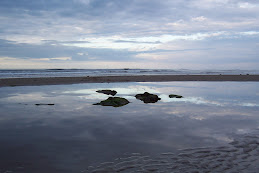
Writers hold a mirror up to the world. A mirror which reflects a grey lidded day when the clouds bear down on the steely sea, as well as the sudden rainbow, the colourful ladder between wave tip and sky. Writers turn a mirror on themselves and on others. It is not everyone who wishes to look into this mirror and see themselves, but it is the lot of writers to do so.
I sometimes wonder as I write reflections such as these, whether I am remembering a half forgotten quote such as Shakespeare's Hamlet: 'To hold, as t'were, the mirror up to nature.' Perhaps I will not claim the above thought as entirely mine, but it is around for me at the moment as I plough on into my future writing projects.
I sometimes wonder as I write reflections such as these, whether I am remembering a half forgotten quote such as Shakespeare's Hamlet: 'To hold, as t'were, the mirror up to nature.' Perhaps I will not claim the above thought as entirely mine, but it is around for me at the moment as I plough on into my future writing projects.

I indulged myself at the weekend with one and half days at the Bridlington Poetry Festival (http://www.bridlington-poetry-festival.com/). This included a workshop on writing sonnets with James Nash, a talk on Pablo Neruda, an Iranian poet reading in Farsi, and performances from Michael Laskey, James Nash, WN Herbert and Jackie Kay (among others). It was both nourishing and inspiring, and took place in the beautiful surroundings of Sewerby Hall.
I learnt from Graham Fawcett that Pablo Neruda had an affinity to the sea which I could intimately relate to. Neruda wrote to 'whoever is not listening to the sea...' that 'the sea will make its answer/to the shuttered heart'. Despite all his wanderings, Neruda returned to the ocean over and over again, and I wonder whether I could ever live too far from it myself again.
Alireza Abiz gave us a timely reminder of the dangers that some poets/writers encounter for expressing their truth. He gave us an insight into the 'Ministry for Culture and Islamic Guidance', the wonderfully Orwell-esque name of the department of censorship in Iran.
However, I guess the highlight for me would be when I approached Jackie Kay after her superb performance and reminded her of her visit to my installation, 'Words in My Head', in the Sitwell Library at Woodend two years ago. And she still remembered it as 'a magic moment'.
I learnt from Graham Fawcett that Pablo Neruda had an affinity to the sea which I could intimately relate to. Neruda wrote to 'whoever is not listening to the sea...' that 'the sea will make its answer/to the shuttered heart'. Despite all his wanderings, Neruda returned to the ocean over and over again, and I wonder whether I could ever live too far from it myself again.
Alireza Abiz gave us a timely reminder of the dangers that some poets/writers encounter for expressing their truth. He gave us an insight into the 'Ministry for Culture and Islamic Guidance', the wonderfully Orwell-esque name of the department of censorship in Iran.
However, I guess the highlight for me would be when I approached Jackie Kay after her superb performance and reminded her of her visit to my installation, 'Words in My Head', in the Sitwell Library at Woodend two years ago. And she still remembered it as 'a magic moment'.
Monday
The great female poet and writer, Edith Sitwell, should be commemorated and given her rightful place in the literary canon. To show your support, check this out - http://www.indiegogo.com/projects/edith-elizabeth-and-I
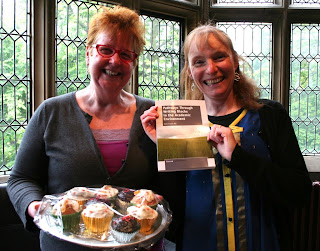
Just the other day I was talking with a couple of writer friends about the need to walk away from our writing and let it 'stew' or 'percolate' or 'compost'. I suggested this in my book 'Pathways through Writing Blocks in the Academic Environment' (www.sensepublishers.com or www.Amazon.co.uk). There I called it the 'waiting-muse' and I described it thus:
Phenomenological psychologist Moustakas talks about “indwelling”, the “turning inward to seek a deeper, more extended comprehension of the nature or meaning of a quality or theme of human experience.” In some senses we are waiting, yet it is not an inactive, lethargic waiting. We are attentive, something is going on in us; but it is below the surface, we are not fully aware of it, at times it appears to be not of our own volition. ...
What is happening behind our most accessible thoughts is where the action is. And once primed the waiting-muse will continue to whirr away in the background, making connections, dreaming up new perspectives and different ways into the issue that we are examining. That’s if we allow it to, are attentive without being impatient and are offering nourishment without insisting it produce.
For me the waiting-muse requires physical exercise - a walk or a swim. How often do I think of where to go next with my writing when I am back-crawling a length of the pool?
Apparently Wilfred Owen also experienced the need for a lull for his poetry to bloom. In the biography I am reading at the moment by Dominic Hibberd, Owen is quoted as saying that a poem can not 'grow by jerks' but must develop 'naturally as leaves to a tree'. A process which requires time and feeding but cannot be forced.
Phenomenological psychologist Moustakas talks about “indwelling”, the “turning inward to seek a deeper, more extended comprehension of the nature or meaning of a quality or theme of human experience.” In some senses we are waiting, yet it is not an inactive, lethargic waiting. We are attentive, something is going on in us; but it is below the surface, we are not fully aware of it, at times it appears to be not of our own volition. ...
What is happening behind our most accessible thoughts is where the action is. And once primed the waiting-muse will continue to whirr away in the background, making connections, dreaming up new perspectives and different ways into the issue that we are examining. That’s if we allow it to, are attentive without being impatient and are offering nourishment without insisting it produce.
For me the waiting-muse requires physical exercise - a walk or a swim. How often do I think of where to go next with my writing when I am back-crawling a length of the pool?
Apparently Wilfred Owen also experienced the need for a lull for his poetry to bloom. In the biography I am reading at the moment by Dominic Hibberd, Owen is quoted as saying that a poem can not 'grow by jerks' but must develop 'naturally as leaves to a tree'. A process which requires time and feeding but cannot be forced.
Tuesday
It is the off-stage characters which hook the writer.
I was watching Clare Balding's interesting documentary on C4 about Emily Wilding Davison and it was the story of the jockey which took me off. Summarised in a couple of sentences; apparently he never rode to his previous standard and was haunted by EWD's face, so much so that he committed suicide in 1951. Thirty-eight years later? Now that's a tale to tweak at the curiosity.
I was watching Clare Balding's interesting documentary on C4 about Emily Wilding Davison and it was the story of the jockey which took me off. Summarised in a couple of sentences; apparently he never rode to his previous standard and was haunted by EWD's face, so much so that he committed suicide in 1951. Thirty-eight years later? Now that's a tale to tweak at the curiosity.
Wednesday
I went to hear a talk today about sculpture given by Andrew Clay, Director of Woodend (creative industries centre - www.woodendcreative.co.uk). He was looking at continuity and discontinuity in the history of sculpture in Britain especially around WWI and the work of Henry Moore and Barbara Hepworth. It was very good, entertaining and informative.
I find it interesting to reflect on my chosen art form - writing - in comparison to others. Andrew pointed to the cataclysmic effect of the 'Great War' on sculpture which finds echoes in the history of literary arts. We were no longer so innocent, perhaps, so optimistic; the sentimental, the fluffy held less appeal.
Sculptors have always experimented with materials, and continued to do so into the 20th century, engaging with the new substances of the time, such as Perspex. That made me think about the stuff of writing and how our material - words & language - has hardly changed since its beginnings. I wonder what our equivalent of Perspex is?
I find it interesting to reflect on my chosen art form - writing - in comparison to others. Andrew pointed to the cataclysmic effect of the 'Great War' on sculpture which finds echoes in the history of literary arts. We were no longer so innocent, perhaps, so optimistic; the sentimental, the fluffy held less appeal.
Sculptors have always experimented with materials, and continued to do so into the 20th century, engaging with the new substances of the time, such as Perspex. That made me think about the stuff of writing and how our material - words & language - has hardly changed since its beginnings. I wonder what our equivalent of Perspex is?
Subscribe to:
Posts (Atom)